Product introduction
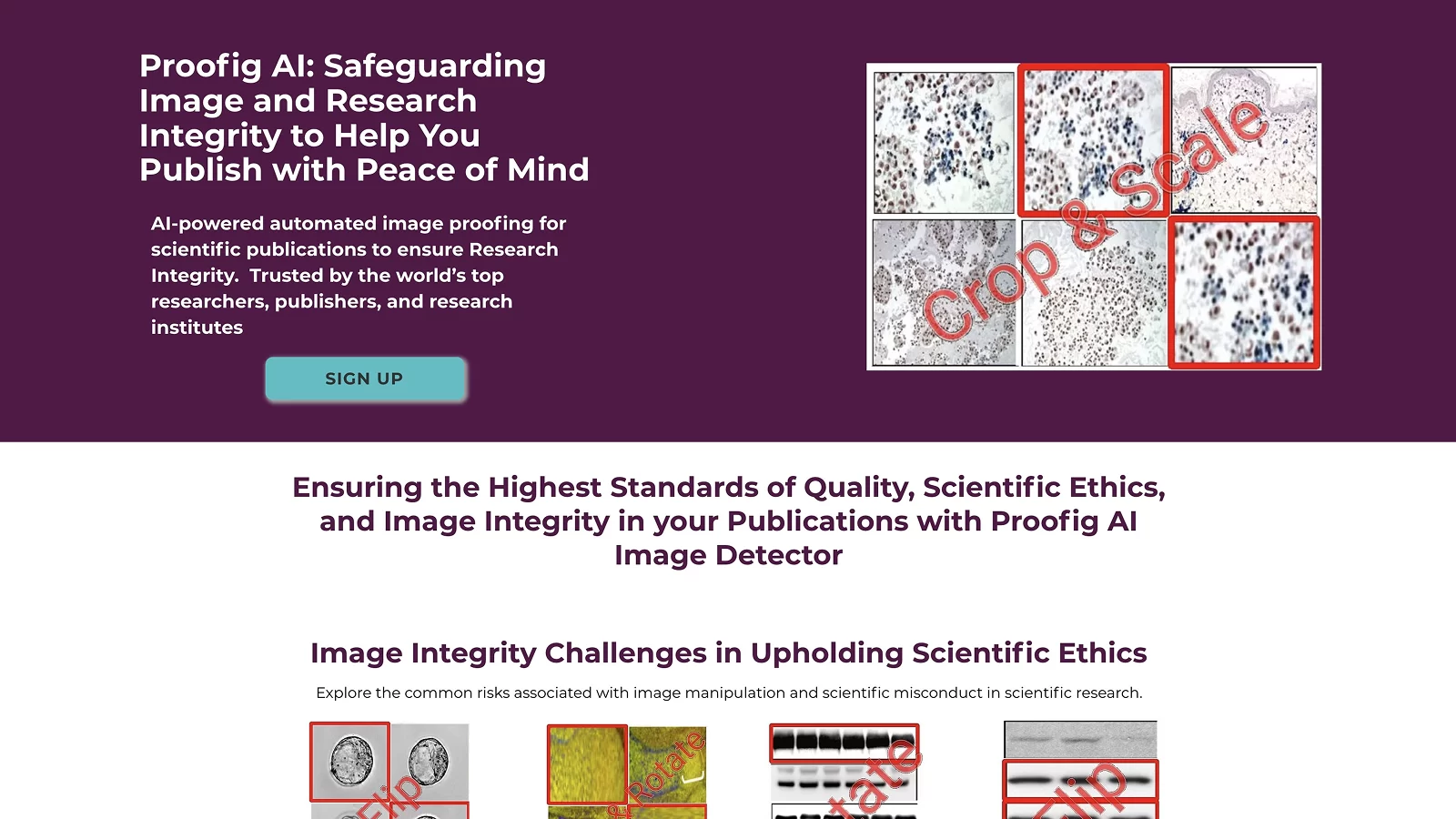
Proofig AI is a scientific image compliance detection platform based on deep learning technology, designed to provide automated assurance for research integrity. Relying on massive image resources from authoritative databases such as PubMed, the platform can efficiently identify image plagiarism, reuse, and tampering in papers, covering risk management throughout the entire lifecycle from experimental data collection to academic publication.
As an "academic gatekeeper" widely adopted by top global journals and universities, Proofig AI helps researchers, publishers, and academic institutions quickly screen for potential misconduct before submission or during the review stage, effectively reducing the risk of damage to academic reputation and ensuring the authenticity and integrity of research data.
Key Features
- Multi-type Image Tampering Detection: Accurately identifies operations such as cloning, splicing, and deletion, supporting analysis of complex data types including microscope images, pathology slides, and Western Blots.
- Intra-manuscript Duplicate Checking: Automatically detects reused images within the same manuscript that have been rotated, scaled, or flipped, reducing internal consistency risks.
- Cross-database Traceability: Uses a database of tens of millions of published images to trace unauthorized reuse or plagiarism sources, enabling cross-literature comparison.
- FACS Image Integrity Verification: Exclusively supports integrity checks and parsing of Flow Cytometry (FACS) images.
- AI-Generated Content Identification: Quickly identifies synthetic images generated by mainstream AI models to prevent new forms of data fabrication.
- Private Data Security: User data is used only for generating inspection reports and is not involved in model training; information zero-leakage is ensured through private server deployment.
Application Scenarios
- Laboratory Internal Pre-review: Automated screening before paper submission reduces manual review time from hours to minutes, preventing unintended oversights from affecting academic reputation.
- Journal Editorial Pre-screening: Integrated into peer review systems by top publishers such as Springer Nature and Elsevier to intercept high-risk manuscripts, significantly reducing the probability of retractions.
- Academic Ethics Investigation: Provides quantitative analysis reports for controversial papers suspected of fabrication, such as Western Blot band comparisons and flow cytometry overlap rate calculations, assisting ethics committees in accelerating decisions.
- Pharmaceutical Company Compliance Audits: Identifies image tampering risks in drug development and clinical trial reports, helping meet the strict requirements of regulatory agencies like the FDA and EMA for data authenticity.