Product introduction
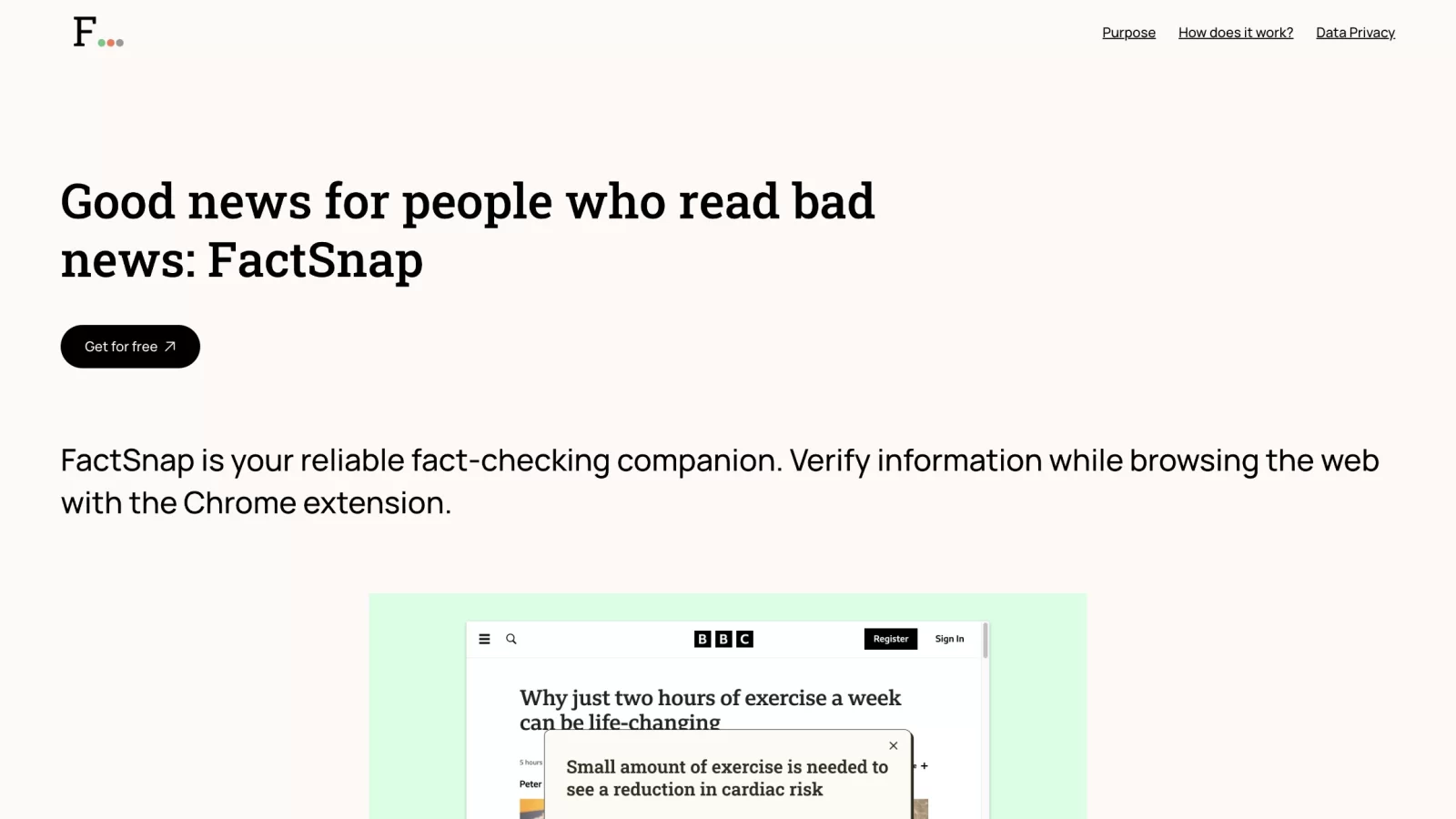
FactSnap is a Chrome browser extension developed by Studio NAND, serving as a key component of the AI4Democracy initiative. It aims to enhance public media literacy and critical thinking in an era of information overload. The tool leverages advanced artificial intelligence algorithms to connect with trusted web resources in real-time, quickly cross-verifying claims encountered during browsing to effectively distinguish truth from misinformation.
As a completely free and privacy-focused tool, FactSnap requires no user account registration. It seamlessly integrates into daily browsing workflows, providing instant fact-checking results while maintaining a smooth online experience, thereby helping to build a healthier, more informed society.
Key Features
- Highlight-to-Check: Users can select suspicious text on a webpage and click the icon to receive an accuracy assessment report within seconds.
- Smart Source Comparison: Utilizes AI technology to automatically search and match reliable sources across the internet, enabling automated cross-verification.
- Three-Tier Rating System: Clearly categorizes verification conclusions into "Accurate," "Suspicious," and "Incorrect" levels to intuitively present information credibility.
- In-Depth Source Tracing: Provides detailed source links and background information, supporting users in further reviewing verification evidence to enhance transparency.
- Immersive Integration: Runs as a plugin on the Chrome browser without interfering with normal reading or operations, ensuring unobtrusive intervention.
Use Cases
- Journalistic Verification: Journalists can use it to quickly verify data citations and key statements in drafts, ensuring the rigor and authenticity of news reports.
- Academic Research Screening: Researchers can instantly verify the reliability of arguments and data during literature reviews, facilitating high-quality research.
- Social Media Myth-Busting: General users can identify potentially false or misleading content spread on social platforms, reducing the dissemination of rumors.
- Media Literacy Education: Teachers can use it as an instructional aid to demonstrate how to objectively evaluate online information, fostering students' independent thinking skills.
- Corporate PR Risk Control: Public relations teams can conduct pre-checks before releasing official statements to ensure data and expressions are accurate, mitigating reputational risks.