Product introduction
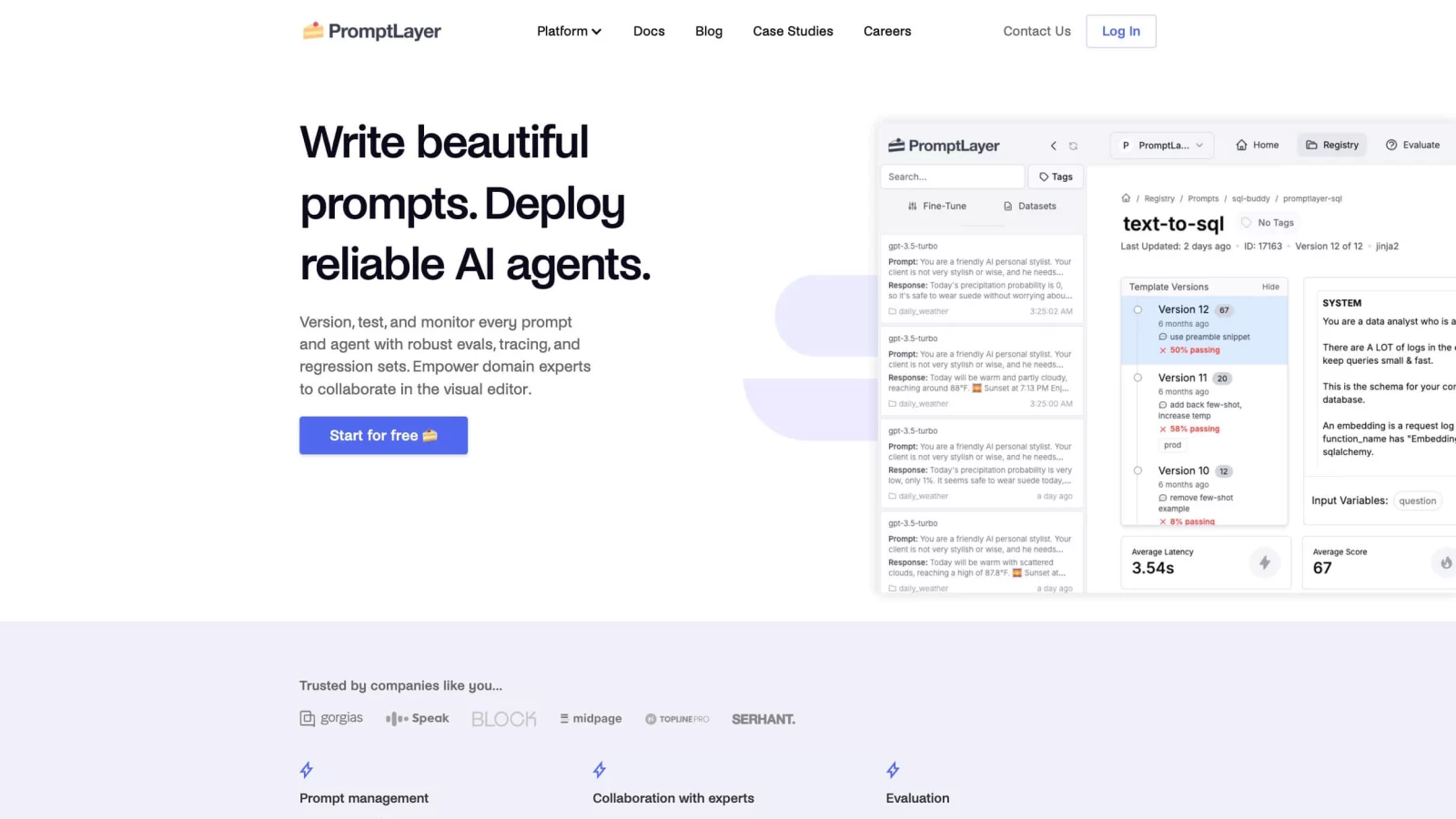
PromptLayer is an LLM interaction management platform designed for prompt engineers, developers, and AI researchers, primarily serving OpenAI API use cases (such as the GPT series). Acting as middleware between code and the OpenAI Python library, it automatically captures and logs detailed information for all API requests, including prompt inputs, model responses, versioning details, and timestamps.
The platform aims to simplify the complexity of prompt engineering by using a version control mechanism similar to code management. This helps users efficiently track, evaluate, and optimize prompts. It enhances the efficiency and reliability of building LLM applications while promoting team understanding and control over model behavior, aiding in the creation of higher-quality AI products.
Key Features
- Automated Logging & Version Management: Automatically intercepts and records every LLM call, preserving full prompts, responses, and metadata. Supports versioned storage of prompts, enabling easy rollback or review of historical changes.
- Advanced Search & Filtering: Provides a powerful query engine allowing users to quickly locate specific requests or analyze model performance under specific scenarios based on multiple dimensions such as prompt content, tags, result status, or operator.
- Performance Comparison & Evaluation: Supports horizontal comparison of different prompt versions to intuitively display their impact on output quality. Correlates metrics like token consumption, response latency, and success rates to assist data-driven optimization decisions.
- Team Collaboration & Access Control: Designed for multi-user environments, supporting sharing of prompt templates, comments, and experimental results among team members. Includes built-in Role-Based Access Control (RBAC) to ensure data security while facilitating knowledge reuse.
- Seamless SDK/API Integration: Acts as a wrapper for the OpenAI Python SDK, requiring minimal code changes to enable logging. Also provides a REST API to meet broader integration needs.
- Usage Monitoring & Cost Analysis: Real-time statistics on API call frequency, token usage, and potential cost trends help managers identify abnormal usage patterns or malicious attacks, ensuring reasonable resource allocation.
Use Cases
- LLM App Development & Debugging: Developers can leverage the platform's recorded interaction data during GPT-based app iterations to quickly pinpoint errors, deeply understand model behavior logic under specific inputs, and optimize prompts for better accuracy.
- Prompt Engineering Iteration: Prompt engineers can systematically test and compare the effectiveness of different prompt versions, continuously optimizing strategies through historical data analysis to ensure stable and consistent prompt quality.
- Team Knowledge Retention: AI teams can share best practices, experimental results, and performance data internally, fostering technical accumulation and collaboration to improve overall development efficiency.
- Cost Control & Operations Monitoring: Operations or product teams can monitor API call volume, token consumption, and latency to ensure efficient application operation within budget constraints and promptly identify performance bottlenecks.
- Non-Technical Optimization Participation: Non-technical roles such as product managers or content experts can easily test and fine-tune prompts using the platform, conducting independent iterative experiments and reducing maintenance pressure on engineering teams.