Product introduction
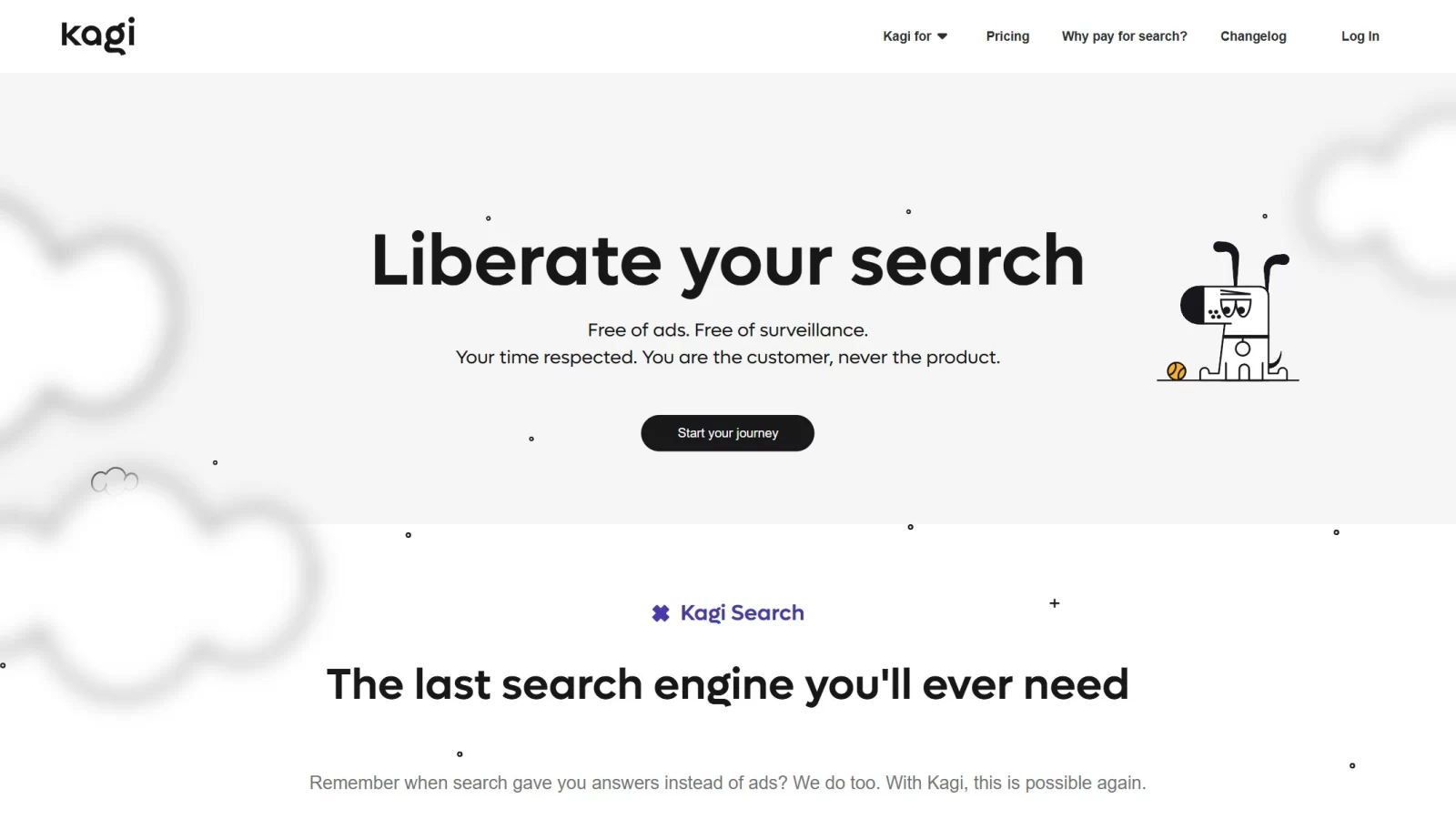
Kagi Search is a subscription-based search engine launched by Kagi Inc. Its core philosophy is to completely break free from the traditional ad-driven model, relying instead on user payments for operation. The product name is derived from the Japanese word "鍵" (key), symbolizing opening a pure, distraction-free web world for users. Unlike traditional search engines, Kagi does not rely on advertising revenue and therefore promises never to track user search behavior or collect any personal data, ensuring that search results are based solely on relevance rather than commercial interests.
The platform integrates its own indexing technology with results from multiple mainstream search engines to provide precise and personalized search experiences. By incorporating enhanced features such as AI summaries and intelligent Q&A, Kagi helps users quickly extract key information while supporting cross-device synchronization of preferences, allowing every user to enjoy a highly customized and privacy-focused search service.
Key Features
- Ad-Free Pure Experience: Completely eliminates sponsored results and advertisements; all rankings are based on content relevance, ensuring objectivity and value.
- Deep Personalization: Allows users to "like" or block specific websites, flexibly adjusting weights to create a custom search result ranking logic.
- Professional Search Lenses: Built-in filters for vertical domains such as academia, programming, and forums enable one-click switching to access high-quality professional content.
- AI Assistance: Integrates AI Q&A and webpage summarization technologies to quickly distill the core points of long articles, significantly improving information retrieval efficiency.
- Advanced Privacy Protection: Supports Privacy Pass and the Tor network to effectively prevent search activity tracking and safeguard users' digital footprints.
- Cross-Device Sync: Personal search settings and preferences sync seamlessly across devices, maintaining a consistent user experience.
Use Cases
- Academic Research: Scholars and students can use dedicated lenses to quickly locate authoritative papers and academic resources, avoiding low-quality content interference.
- Technical Development: Programmers can efficiently find code solutions via the programming lens, filtering out irrelevant tech blogs to enhance debugging efficiency.
- Business Research: Business professionals can access market data and industry information unpolluted by ads, aiding in more objective decision-making.
- Parental Control: Parents can build a safe search environment by blocking inappropriate content while enjoying personalized recommendations.
- Privacy-Sensitive Professions: Journalists, lawyers, and other professionals can conduct sensitive queries without worrying about leaving digital traces.
- Cross-Border Communication: Built-in translation covering 244 languages meets content acquisition and communication needs in multilingual environments.