Product introduction
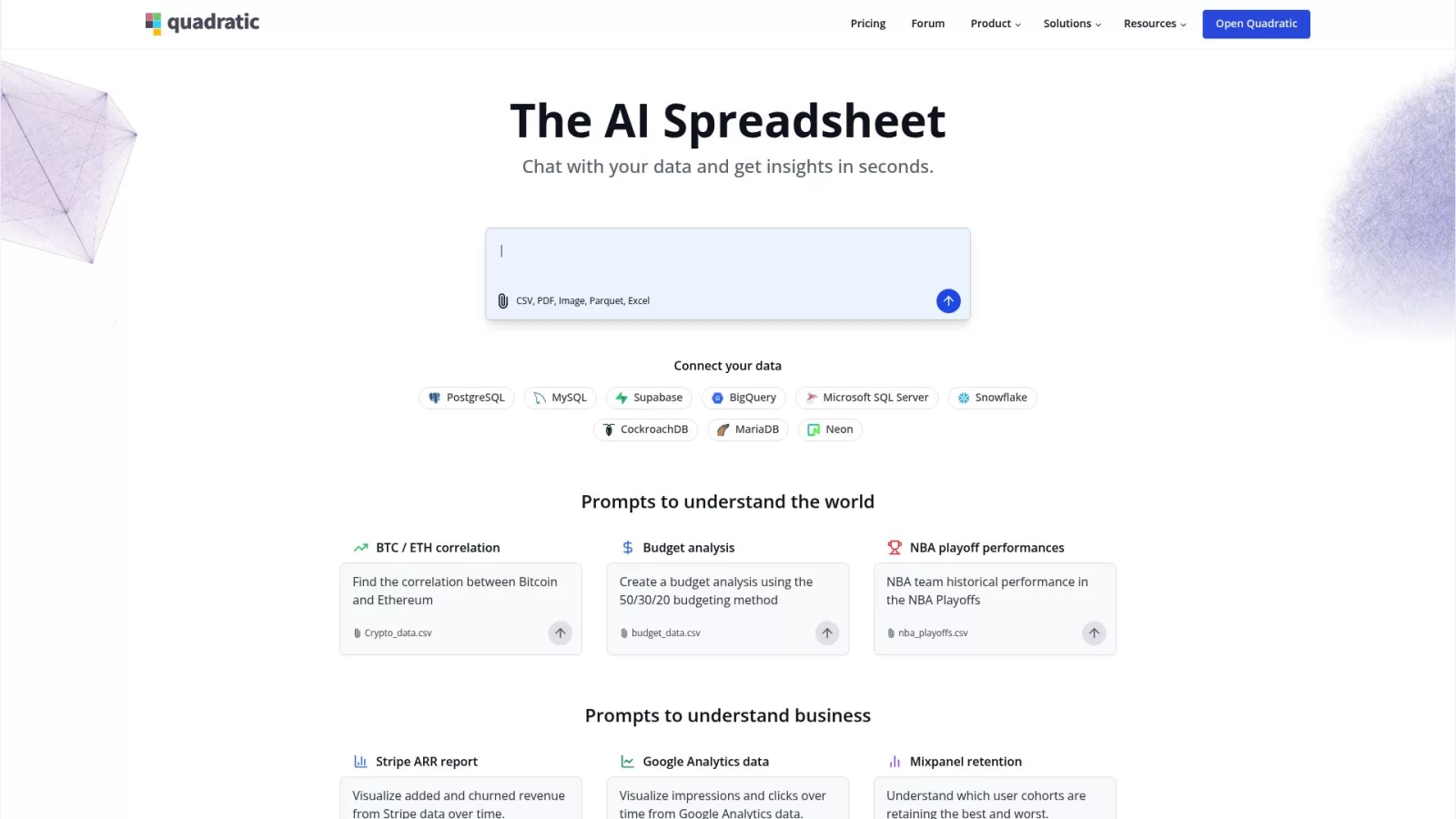
Quadratic is a next-generation data analytics platform that combines artificial intelligence with a spreadsheet interface, designed to break through the performance bottlenecks and usability barriers of traditional table tools. It retains the familiar grid layout while integrating a powerful AI engine, enabling both technical professionals and non-technical business users to efficiently handle complex data. Quadratic simplifies the entire workflow from data ingestion to decision support by natively integrating AI capabilities, addressing the tedious processes of data preparation, cleaning, and visualization in data-driven environments.
The platform overcomes the performance limitations of traditional spreadsheets when handling large datasets and resolves version collaboration challenges. Users can connect directly to various databases and external data sources without needing to master complex SQL statements or rely on specialized ETL tools. Its intelligent data preprocessing features automatically detect data quality issues and provide repair solutions, significantly reducing the time cost of data cleaning and allowing teams to focus more on uncovering the commercial value behind the data.
Key Features
- AI-Powered Analytics Assistant: An integrated AI assistant spans the entire data analysis process, supporting natural language queries, pattern recognition, and the generation of analytical suggestions. This helps users quickly extract key insights from massive datasets, lowering the technical barrier for professional analysis.
- Natural Language Text Analysis: Featuring advanced NLP capabilities, it supports sentiment analysis and topic extraction on unstructured text data. Users can easily discover potential patterns and emotional trends in customer feedback or comments through conversational commands.
- Seamless Data Integration: Natively supports connections to mainstream databases and data warehouses such as PostgreSQL, MySQL, and Snowflake. Users can retrieve data directly within the spreadsheet environment using natural language descriptions, achieving rapid aggregation and integration of multi-source data.
- Automated Visualization Generation: Automatically recommends and generates appropriate chart types (such as sales trend charts or correlation scatter plots) based on natural language descriptions. This eliminates the need for manual configuration of complex chart parameters, enhancing data presentation efficiency.
- Real-Time Collaboration and Version Management: Supports multiple users collaborating online simultaneously, allowing team members to edit the same worksheet and view changes instantly. It offers comment interactions based on cells and charts, along with a complete version history, facilitating the tracking of analytical logic evolution.
Use Cases
- Marketing Optimization: Marketing teams can integrate user behavior data from multiple channels, use AI to analyze social media interactions and customer feedback, evaluate the conversion effects of different marketing campaigns, and precisely optimize投放 strategies.
- Sales Forecasting and Management: Sales personnel can build predictive models using historical transaction data to identify high-potential opportunities, forecast future sales and inventory needs, and improve the responsiveness and closing rates of sales teams.
- Product Iteration Decisions: Product managers can analyze user tickets, surveys, and feedback text to quantify user pain points and assess market acceptance of new features, providing data support for product roadmap planning.
- Financial Risk Control and Budgeting: Finance professionals can quickly build dynamic financial reports and budget models. With AI assistance for revenue and expense forecasting and anomaly detection, they can enhance the accuracy of financial planning and risk management capabilities.
- Customer Service Experience Upgrade: Customer service teams can batch-analyze customer inquiry records, automatically categorize common issues and emotional fluctuations, identify service shortcomings, and formulate targeted improvement measures to boost customer satisfaction.