Product introduction
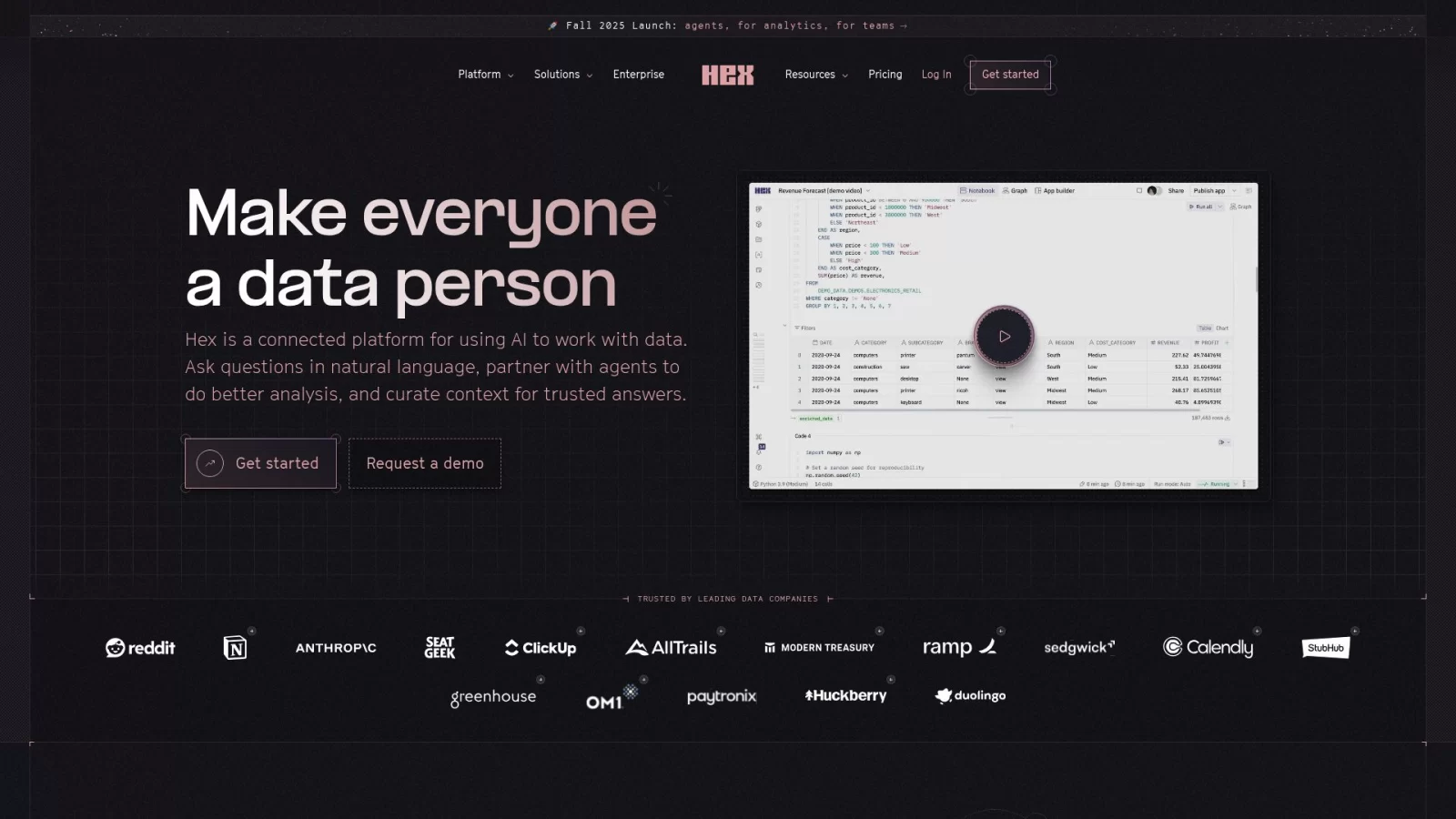
Hex is a collaborative analysis and application building platform designed for data teams, integrating data connection, exploration, visualization, and business application development into a unified workspace. It aims to eliminate data silos by fostering deep collaboration among data scientists, analysts, and business users through shared components, version control, and collections.
The platform features built-in AI assistance, including automatic SQL generation, code completion, and error correction, significantly boosting analytical efficiency. Hex also provides granular permission management, audit logs, and data governance mechanisms to ensure enterprise-grade data security and compliance, helping teams efficiently translate data insights into tangible business value.
Key Features
- AI-Powered Intelligent Analysis: Integrates AI technologies like Notebook Agent to support natural language SQL query generation, automatic code completion, and error fixing, reducing repetitive tasks and accelerating the journey from data to insights.
- Extensive Data Source Integration: Seamlessly connects with mainstream databases, data warehouses (such as Snowflake), and cloud storage services (like AWS Marketplace) for one-stop multi-source data access and analysis, eliminating the friction of switching tools.
- Real-Time Collaborative Notebooks: Offers a multi-user collaborative environment supporting Python, SQL, and no-code analysis. Team members can share code, data, and results in real time, enhancing communication through threaded discussions and version control.
- Interactive Data Application Building: Enables rapid creation and publishing of interactive data applications based on notebook analysis results, allowing business users to self-serve data exploration and gain intuitive insights to aid decision-making.
- Enterprise-Grade Security & Governance: Features a comprehensive data permission control system with customizable view and edit rights, along with audit logs to track data access records, ensuring the security and compliance of data assets.
Use Cases
- Product Iteration & Optimization: Product teams can integrate user behavior, performance metrics, and feedback data to deeply analyze product strengths and weaknesses, adjusting strategies based on data insights to enhance user experience.
- Marketing Strategy Evaluation: Marketing teams use the platform to analyze campaign effectiveness, customer conversion rates, and channel ROI, combining this with customer lifetime value to develop personalized marketing strategies and optimize return on investment.
- Sales Performance Forecasting: Sales teams connect sales and market data to monitor performance, predict future trends, and optimize channel efficiency, enabling realistic goal setting and revenue growth.
- Customer Relationship Management: Customer success teams leverage usage data and service feedback to assess customer health and churn risk, creating targeted retention plans to improve satisfaction and reduce churn.
- Financial Risk Control: Financial institutions utilize transaction and customer data to evaluate asset risk levels, predict credit default probabilities, and optimize risk management strategies to safeguard capital.