Product introduction
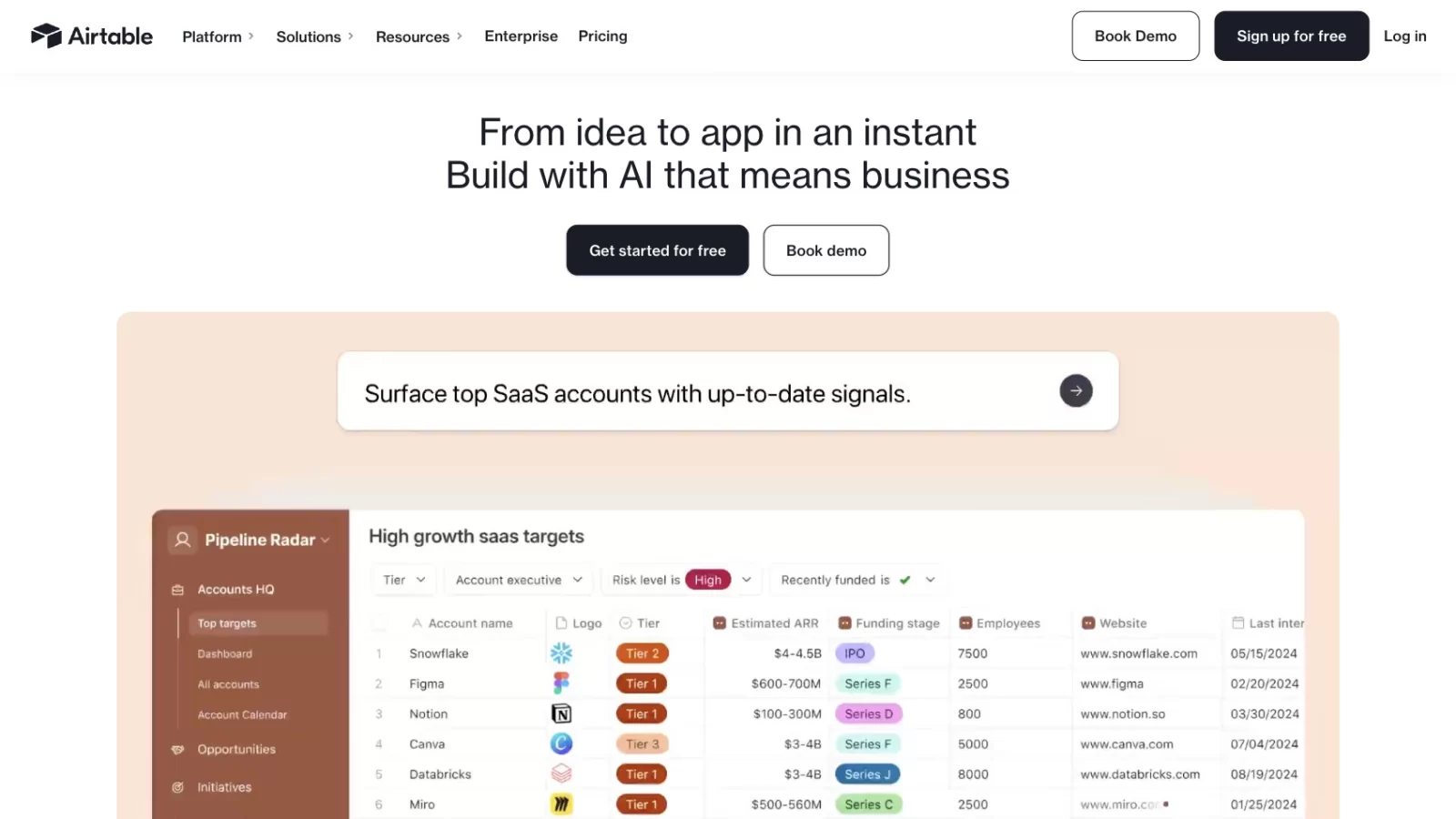
Airtable is a low-code application platform that blends artificial intelligence to bridge the gap between traditional spreadsheets and complex databases. With an intuitive interface and flexible underlying architecture, it helps teams of all sizes build customized data management systems and business process applications. As a core tool for digital operations, Airtable not only supports the storage and management of massive amounts of data but also emphasizes cross-departmental collaboration and process automation, aiming to improve organizational efficiency and assist management in making precise decisions.
The platform deeply integrates the Omni AI assistant and AI agent capabilities. Users can generate complete applications, workflows, and even user interfaces simply by describing them in natural language, without needing programming knowledge. This "conversation-as-development" model significantly lowers technical barriers, while smart agents automatically execute repetitive tasks such as web research and feedback analysis, allowing teams to focus on high-value strategic work and adapt quickly to market changes.
Key Features
- AI-Assisted App Development: Leveraging the Omni AI assistant, users can generate complete applications—including table structures, interaction logic, and UI interfaces—using natural language commands, enabling zero-code rapid table creation and app building.
- Intelligent Agent Automation: Supports deploying AI agents across large-scale datasets to automatically perform information gathering, sentiment monitoring, and customer feedback processing, significantly reducing manual intervention and improving data processing efficiency.
- Multi-Source Data Integration & Sync: Seamlessly connects with mainstream business tools like Jira, Salesforce, and Tableau, breaking down data silos to ensure real-time synchronization of critical business information across different systems, providing a unified data view.
- Visual Interface Customization: Offers a drag-and-drop interface designer, allowing users to quickly build personalized dashboards and info panels based on existing data, optimizing the user experience and operational convenience for team members.
- Workflow Automation Engine: Features powerful built-in automation rules that can automatically trigger notifications, status updates, and data synchronization, simplifying tedious daily administrative and operational processes and freeing up human resources.
Use Cases
- Product R&D Management: Centralizes management of requirement pools, version roadmaps, and user feedback. Uses AI to assist in generating product specification documents, accelerating the iteration cycle from concept to implementation.
- Marketing Operations: Tracks the entire lifecycle of marketing campaigns and integrates multi-channel marketing resources. Leverages AI to analyze market trends and campaign performance, optimizing marketing strategies to improve return on investment.
- Project Progress Control: Monitors task progress in real-time through diverse views such as Kanban boards and Gantt charts, reasonably allocates team resources, identifies potential risks, and ensures timely project delivery.
- HR Efficiency Improvement: Manages employee records, recruitment processes, and training systems. Uses AI to automatically generate job descriptions and preliminarily screen resumes, simplifying HR administrative tasks and improving recruitment quality and employee satisfaction.
- Content Creative Planning: Plans content publication calendars, tracks creation progress, and manages assets. Combines AI analysis of content performance data to guide content direction and enhance brand influence.