Product introduction
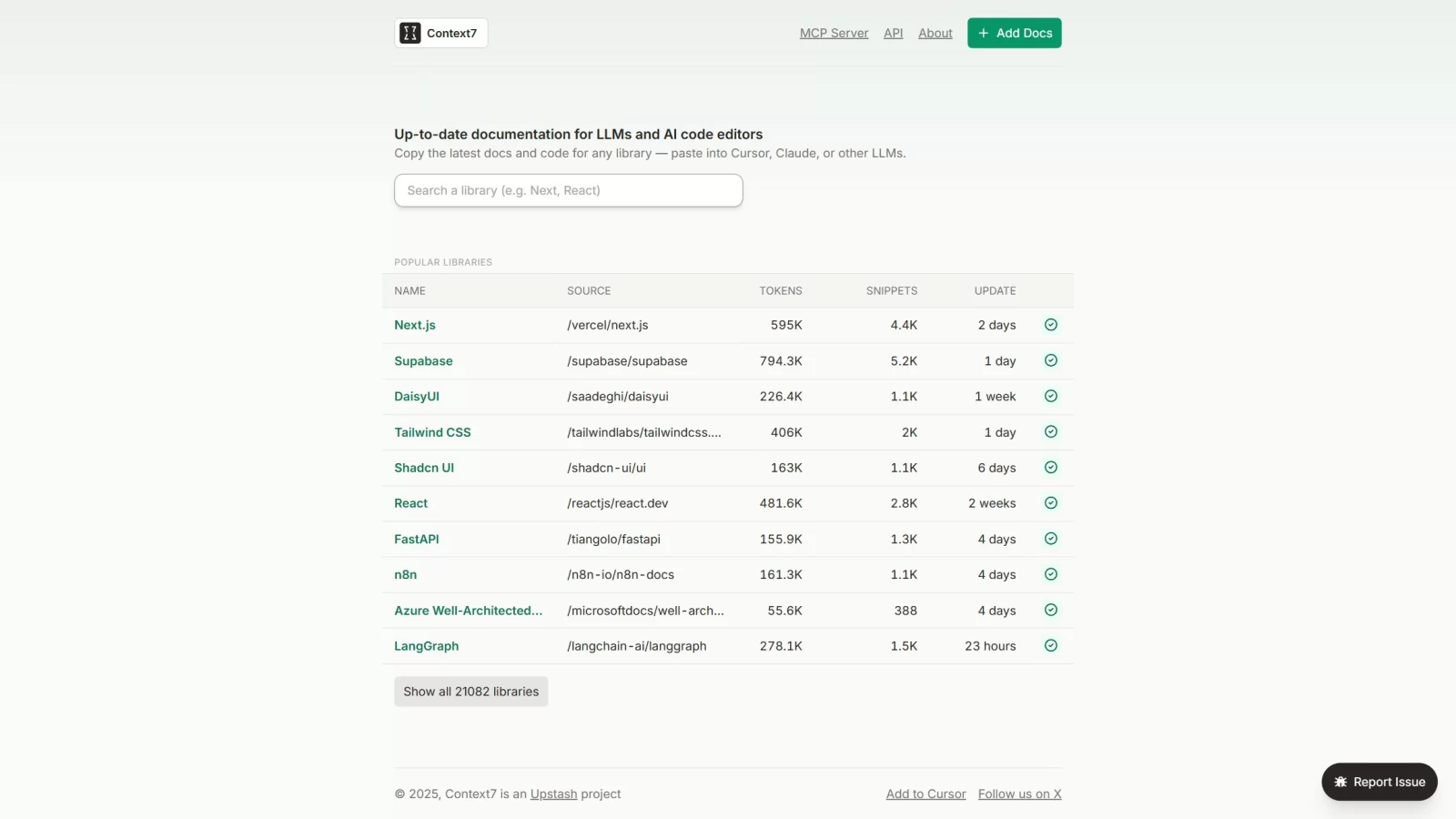
Context7 is a context enhancement service designed for large language models (LLMs) and AI coding editors, addressing code generation biases caused by lagging model training data. The platform dynamically integrates the latest official documentation to provide developers with real-time, accurate API references and code examples, effectively eliminating issues related to "hallucinated APIs" or outdated code.
As a tool supporting the Model Context Protocol (MCP), Context7 seamlessly embeds into mainstream development environments such as Cursor and Claude Desktop. Its core value lies in ensuring that AI-generated code is based on current best practices, particularly for rapidly iterating frameworks like Next.js and React. This helps developers significantly reduce debugging time while improving coding efficiency and accuracy.
Key Features
- Real-Time Documentation Sync: Automatically fetches the latest documentation from official sources, ensuring LLM output aligns with current technology stack standards.
- Precise Version Control: Supports filtering content by specific library versions to mitigate API incompatibility risks caused by version differences.
- Broad Ecosystem Compatibility: Achieves deep integration with editors like Cursor, Windsurf, and VS Code via the MCP protocol for convenient operation.
- Intelligent Semantic Search: Combines vectorization and re-ranking algorithms to quickly locate the most relevant code snippets and solutions from vast amounts of documentation.
- Free Access Strategy: Powered by Upstash infrastructure, it is completely free for individual users and educational purposes with no hidden fees.
Use Cases
- High-Frequency Framework Development: Provides version-adapted code examples for frequently updated frameworks like Next.js and Tailwind, reducing migration and maintenance costs.
- New Technology Exploration: Allows direct access to official latest examples when encountering unfamiliar libraries, preventing guidance by outdated tutorials and accelerating the learning curve.
- Production Environment Build: Ensures AI-generated code strictly matches production environment dependency versions, lowering the probability of online failures.
- Documentation Automation Maintenance: Library authors can submit projects to the platform to automatically generate llms.txt documents optimized for LLMs, enhancing tool discoverability.
- Programming Teaching Assistance: In teaching scenarios, students can verify theoretical knowledge using real-time documentation, allowing teachers to maintain timeliness without manually updating examples.